Thursday, November 14, 2019

Preparation for Spiritual Warfare


     There is a growing market for books about manhood and the family. A couple of years back, Pastor Chris Wiley contributed to that market with his book, Man of the House: a “how to” book for young men on how to build a household. While not overtly religious, it is based in a Judeo-Christian, natural law ethic. It serves as a guide for young men who want to know how to build a household.

     His new book, TheHousehold and the War for the Cosmos, serves as a prequel to Man of the House. It clearly presents the foundation for a Christian household. The subtitle is “recovering a Christian vision for the family” but this not your typical, Evangelical (read mushy) book on how to be a better dad. It is a book about what leadership in a Christian household looks like. And it begins with piety.
     
     The piety he describes is not the piety of abstaining from cards and alcohol, but a virtue that is much more profound. He describes its meaning in Roman times when the Apostle Paul wrote about it, and how the meaning of the word was emasculated in modern times. When we hear the word “piety” we should think more about sacrifice, patriotism, and responsibility than quiet walks on a Sunday afternoon. Piety is a masculine virtue.

     He showcases this piety through comparing and contrasting the patriarch Abraham with Aeneas, the founder of Rome. Without giving away the history, there is much more in common with those two men than I ever thought, and they both go a long way in teaching us how piety is displayed. This was an especially good chapter.

     In the last half of the book, Pastor Wiley applies this stronger piety to us, explaining how Scripture calls for fathers to teach their families to be pious, pointing again to Abraham as an example. My favorite chapter was when he walks the reader through Paul’s letter to the Ephesians, documenting how piety is developed from chapter 1 through chapter 6. The pinnacle was when he connected the household codes of Ephesians (5:22-6:9) to spiritual warfare (6:10-21). I’ve never read a commentator who could convincingly explain Paul’s logic in writing about households to writing about warfare, but the author’s explanation is more than convincing. To summarize: the household was (and still is) an instrument of warfare. In ancient times it was literal warfare; today godly households are to be instruments of spiritual warfare. Hence the application: get married and begin your battle plans.

     This book accomplishes what is purports to do: present a vision for the Christian family. It doesn’t present the detailed plans of Man of the House, but it lays the necessary foundation. I would have enjoyed a longer treatment of some of the ideas, but I’m sure he will present those in time.
Sometimes books on the family leave you feeling discouraged; either you can’t possibly put into practice what they suggest, or they tell dads to become more feminine and less masculine. This book does neither. It points out a real problem and shows how we can begin the repair process. I received a review copy of this book from the publisher, and am thankful; it will benefit me for many years.

Friday, March 1, 2019

A Pastor's Need to pray

For this reason I bow my knees to the Father [a]of our Lord Jesus Christ, from whom the whole family in heaven and earth is named, that He would grant you, according to the riches of His glory, to be strengthened with might through His Spirit in the inner man, that Christ may dwell in your hearts through faith; that you, being rooted and grounded in love, may be able to comprehend with all the saints what is the width and length and depth and height—to know the love of Christ which passes knowledge; that you may be filled with all the fullness of God. Now to Him who is able to do exceedingly abundantly above all that we ask or think, according to the power that works in us, to Him be glory in the church by Christ Jesus to all generations, forever and ever. Amen. - Ephesians 3:14-21

After Paul wrote of the divine mystery of God, bringing the Gentiles into the covenant and making them a part of his plan to reorder the world under Christ, he prays this prayer. The first half of this letter has addressed the work that God has done for us. He chose us for adoption; he redeemed us through Christ from our former slavery, gave us his Spirit, and proclaimed the good news to us through apostles and prophets. He brought us into his presence, the heavenly places in Christ. Now what? Now Paul prays. We, the adopted former slaves, have been brought into God’s household. Like all household members, we have responsibilities assigned to us. We are a part of God’s cosmic restoration plan. But before Paul comes to that, he prays, for it is only in prayer that we become the faithful servants God calls us to be.

A pastor's job is first and foremost, to pray. No shepherd can lead his sheep if he does not first pray for them. I am tempted to rush to the work of men, admonishing them to complete the work God calls them to, warning them of danger, and encouraging them in their walk. But all is empty without the power of prayer. Paul says here that the Father can "do exceedingly abundantly above what we ask or think, according to the power that works in us" (emphasis mine). What though, stirs the power of the Spirit in the lives of believers? The prayer of their shepherd, as in Paul's prayer here. Certainly do the work; counsel, teach, encourage, admonish, and warn, but first, always first, pray.


Thursday, November 8, 2018

A Preacher Has to Preach

I read this article yesterday from Pastor Tim Bayly and it was convicting. The thing that sticks out to me is the burden of leadership that falls on pastors. We can't escape leading; the problem is how we lead and the direction in which we lead. I'm either leading my congregation to flowery beds of ease a.k.a. destruction or I'm leading them to take up the cross and follow Christ on the narrow way.

Earlier in the day I'd read Isaiah 58:1, "Cry aloud; do not hold back; lift up your voice like a trumpet; declare to my people their transgression, to the house of Jacob their sins." Pastors must not hold back in their preaching. This doesn't mean they should preach uncontrolled but they can't worry about repercussions or blow-back from calling out the sins of the people. God began His word to Isaiah in this chapter by warning him to cry aloud, to not withhold his voice, even though the things God would say through his prophet would be hard to hear. Pastors today must do that same.

We live in sinful times (nothing is new under the sun). If I fail to boldly proclaim the whole counsel of God, I fail as God's minister. I must not shirk back from applying the word to the people of God, especially when it's uncomfortable.

Scripture says if a man fails to provide for his children, his fundamental duty as head of the household, he's worse than an infidel. If a pastor fails to provide for and lead his flock, he's not much better.

Monday, November 5, 2018

Learning the Joy of Contentment

In her book, Seeking God, Esther de Waal describes the problems with the excessive freedom of our lifestyle choices:

"Simply at the level of working out an acceptable life-style the choices have now become quite bewildering. Shall I support Mother Teresa in Calcutta or help leprous children in Tanzania...I may well end up flitting form one to the other until I have collected a tagbag for myself of well-intentioned but half-thought-out ideals based on a confused and superficial amalgam of some of the more attractive elements in each. The danger then of course that I become too confused and superficial.
Instead of this bewildering and exhausting rushing from one thing to another monastic stability means accepting this particular community, this place and these people, this and no other, as the way of God."

The book is on what we can learn from The Rule of Saint Benedict, so don't let the word "monastic" throw you off. Christians should be the most stable people in the world. We are built on the Rock, after all. This doesn't mean we will be born and die in the same place, the ideals of Wendell Berry notwithstanding. I am a transplant to the Northwest after six generations of living in northern Alabama, after all. But we should not easily flit from one place to another, from one church to another, or from one cause to another. God has called us wherever we are right now.

We are called to love our neighbors in front of us first, before giving to and thinking about our invisible neighbors across the world. When we discipline ourselves to give to our church, our neighbors, and our family, one of the by-products is the joy of contentment.

Tuesday, February 20, 2018

Attributes of God for beginners

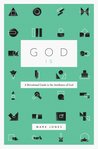
God Is: A Devotional Guide to the Attributes of GodGod Is: A Devotional Guide to the Attributes of God by Mark Jones
My rating: 4 of 5 stars

Most wouldn't think of a book on the attributes of God as devotional reading, but pastor Mark Jones accomplishes that task. He writes in a style that is clear and pointed. He takes the attributes of God one by one, describes the doctrine involved with that attribute, explains how it is revealed to us in the incarnate Christ, and finally demonstrates how it applies to Christians individually. It isn't a "soft" devotional, by that I mean it isn't one that makes you feel warm and good about yourself, and I appreciate that. Some of these teachings will clash with our sensibilities, but they are taken from Scripture so when that happens, it's because our sensibilities need correction.

First Principles


At the beginning of one’s blog, I believe a statement of first principles are in order. In the Year of our Lord, 2018, these are my beliefs. I believe in the Christian faith, as expressed in the Apostles’ Creed, the Nicene Creed, the Athanasian Creed, and the Creed of Chalcedon. I believe in the Triune God, God the Father, God the Son, and God the Holy Ghost. The Bible is the inspired, infallible, inerrant Word of God. It is true from cover to cover and correct in everything in speaks to (and it speaks to everything).

I was raised a Southern Baptist, was ordained to preaching ministry as a Southern Baptist, served in pastoral ministry in a Primitive Baptist Church, and now serve as the pastor of Valley Covenant Church, a Presbyterian church in the Communion of Reformed Evangelical Churches (CREC).  

I am Protestant, and I stand in the Reformed tradition of Protestantism, in line with John Calvin, Martin Bucer, Thomas Cranmer, and Henry Bullinger.

I am a Calvinist. When Adam sinned, he sinned on behalf of all his progeny. His sin is passed unto all men born after him. In God’s sovereign grace, He chose a people before the foundation of the world to save unto Himself. Far from being a small number, the number of those chosen by God is more than the any one can count (Rev. 7:9). Jesus came to die for all those who believe in Him, from every tribe, tongue, and nation. In His death He took the wrath of God that His people deserved upon Himself, and cleansed them from their sin, once and for all. In His resurrection He gave life to His bride, the Church. That same sacrifice yields blessings innumerable for every living creature. In time He sends His Holy Spirit to work the hearts of His covenant people, causing them to look to Him in faith. And all those who trust and obey Him will inherit eternal life.  

I am Presbyterian in my beliefs of church government. I believe in covenant baptism of children, a baptism which calls all who receive it to trust Christ and submit to Him forever. Outside the church there is no normal hope of salvation, for the church is the body of Christ.

Politically I am conservative, theocratic, and patient. I am thankful to be a citizen of the United States of America, and a grateful resident of Lewiston, Idaho. I have no hope of turning anything around through political means alone, yet participation in politics, especially local politics, is one of God’s means for preserving and building society. Yet there are other governments ordained by God for the building of society, that of the church (already mentioned) and the family. My job as a pastor is to proclaim faith and obedience to the Triune God in our church, our families, and our city.

You can probably understand who I am best by knowing the men who’ve had the greatest influence on me. They are, in no particular order: Moses, the Apostle Paul, C.S. Lewis, Robert Lewis Dabney, G. K. Chesterton, St. Augustine, Doug Wilson, George Melvyn Ella, Charles Spurgeon, Alfred the Great, Martin Bucer, and R.C. Sproul.

I believe that we all must one day die, and afterwards receive God’s judgment. Those who die apart from Christ will suffer eternal punishment in Hell. Those who die in Christ will forever be with the Lord; at the last day they will be resurrected, have new bodies, and forever serve and praise the Triune God in the New Heavens and the New Earth.

May God be gloried and anyone who reads these writings be edified. “And the very God of peace sanctify you wholly; and I pray God your whole spirit and soul and body be preserved blameless unto the coming of our Lord Jesus Christ.” Amen.  – I Thessalonians 5:23

Helpers of Our Joy

Helpers of our Joy: How Humorists Help us See the World in the Light of Eternity What's the point of humorous stories? Some people see t...