The Whig Interpretation of History by Herbert Butterfield
My rating: 3 of 5 stars
I appreciate the sentiments of the author, Herbert Butterfield. Namely, that historians should not approach their craft preconceived ideas that they want to push. In other words, come to history with an open mind, not a set plan on what you want to prove and choosing to report facts and events that back your thesis.
The problem with this book is that his approach can eliminate the idea of learning lessons from history at all. Despite his protests, his extreme caution in determining morality in past events rings hollow in the postmodern age. In fact, his view could play right into the postmodern perspective that says truth is determined by who is in power. Add to the fact that his favorite whipping boy in the book is the Protestant Reformation and the benefits many claim as a result. I acknowledge that the benefits can be exaggerated, but the sword cuts both ways. The glories of Medieval Catholicism can be (and at times have been) exaggerated to the point of absurdity, e.g. Brad Gregory's Unintended Reformation.
Another problem is the dense prose. He is not clear in his writing and I had to plod through it. Read this book was like finding copper coins in a dense jungle. Nevertheless he makes good points about the dangers of faulty historical interpretation and what the role of the historian should be. Anyone who studies history should read it. Everyone else, feel free to pass.
Monday, February 17, 2020

Friday, February 14, 2020
Freedom to live
It is only through God Himself existing and being my Creator that I, and the world, has life. We are free; free to think, to play, to eat, to fast, to speak, to love, to bless each other; free to kill, steal, lie, to sin against one another and God Himself. We are free because God lives and made us in His image. We are not deterministic automatons, merely fulfilling the biding of our bodily chemistry. We are filled with ability, hope, and joy because God made us and gives us the breath of life.
Thursday, February 13, 2020
Problems with good intentions
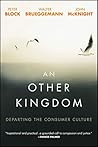 An Other Kingdom: Departing the Consumer Culture by Peter Block
My rating: 2 of 5 stars
While I appreciate the vision of this book - and economy based on covenant and common good rather than contract and individualism - I disagree with much of its application. The only way to bring the vision into practice is through excessive government intervention into people's lives. There are many problems with much of our economy, but those can't be fixed by further regulation and redistribution.
Some of their interpretation of other writers is poor. For example, the authors reduce Adam Smith to a modern-day Libertarian. But their view shows a stereotype of Smith rather than a true reading of his work. He was far more nuanced in his approach of political economy than such an surface-reading suggests. Also, the use of Scripture to support their goals is admirable, but it is one-sided, neglecting what Scripture says about the personal responsibility people must take for their choices.
The language of neighborliness, mystery, liturgy, and covenant is humane way of presenting their arguments, but the application left much to be desired.
Subscribe to:
Posts (Atom)