Monday, May 11, 2020

Loving the Church

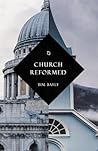
Church ReformedChurch Reformed by Tim Bayly


This is not a book to help you feel better about yourself or your church. It is a simple book that explains what the Church is, why she exists, and how she should respond to her husband, the Lord Jesus Christ. It is a book about Reformation, particularly what the Protestant Reformers recovered, and how much of that recovery has been lost. Certainly we can point to the similarities we've maintained with our forefathers in the faith, but as the author points out, we can keep the shell of orthodoxy while hollowing out the living faith that was passed down to us.

Pastor Bayly gives a solid presentation and explanation of the Reformed doctrine of the Church and how it applies, that is, how we should live in light of those teachings. It he stopped there, it would be similar to other confessional books on the Church. But he goes further. In the last chapter - my personal favorite - calls people to love the Church. Not just to love the Church invisible or universal church, bu the visible, local, and at times, sinful church.

We've all heard that no church is perfect, which is true. What's also true is that when we get hurt or find something in the church that grates on us, we too quickly pick up our toys and leave. We can easily profess to love the church while neglecting to gather with the saints and exhort one another. That's not loving. Pastor Bayly calls us to not forsake our local congregations just because we spot imperfections in out pastors, elders, and members. This is a temptation because a book like this makes it easier to see her flaws. We love her because Jesus loves her; we are called to sacrifice for her as our Savior sacrificed Himself for her. How do we do that? We pray for her, we serve her, and we remain faithful to her despite her problems.

Don't read this book if you expect your inner pharisee to be strengthened. There's something in this book to convict every person who reads it. You will probably get frustrated at some points or disagree at others. Don't let that stop you from seeing it through. If you come away with a deeper appreciation and desire to honor the Bride of Christ, the author's job is complete.

View all my reviews

Saturday, April 11, 2020

Holy Saturday

I've always considered Holy Saturday to be an odd day. Gone is the intensity of Good Friday; still to come is the celebration of the resurrection (already and not yet, anyone?). How should we treat this day?

A good start would be Luke 23:56. Joseph of Arimathea and several women prepared Jesus for burial just before the Sabbath day. After everything that happened the day before, it says they "rested the sabbath day according to the commandment." The sabbath was coming and they knew what God commanded. There was nothing to do but obey.

What do you do when you're exhausted, when you've worked hard yet all you were wishing for falls through and you're left empty? This is what Jesus' followers were facing on that Saturday. There was nothing to do but trust and obey.

We're often left in that waiting period. We've done everything we can yet we don't see our hope fulfilled. What should we do? Keep on trusting. Obey whatever you know to do and rest in the promises of God. The resurrection is coming. 

Friday, March 20, 2020

Redeeming Your Time

As a dad who is currently at home with his family, I have the privilege of returning to an older pattern. I am a high school teacher who loves teaching. Before returning to teaching this year, I was a pastor who worked from home. Both of these vocations allowed me to have time with my family. Extra online teaching, meetings, gardening, and studying are all time consuming. The work of building a household is ever present and there's always more that can be done. But the most important part of the job is preparing our children.

Right now many dads and moms are at home. Whether their jobs are shut down or they are working from home, there are more fathers and mothers at home together with their kids than in recent memory. Quite a few are going crazy already since they don't know what to do besides turn on one more Netflix show. The blessings of Netflix and Amazon Prime are obvious and can be used well, but what else should we be doing?

Paul told the Ephesians to continually redeem the the time because of the evil days. That was not a call to be more efficient, but to take what was lost and restore it. Many in the church at Ephesus had lived carnal lives before coming to faith in Christ and the had to start where they were, not where they might like to be. The message that in Christ they could redeem the time was a gracious blessing.

No one would call the Corona virus a blessing. It is a product of the evil that came into the world with man's fall. Our hearts grieve  for the thousands who have died and many others who suffer with it. Yet the time God has given us with our families can be wasted or redeemed; it can be used to heal and strengthen our relationships or further damage them. The choice is ours.

Redeeming the Time

How then do we redeem the time God has given us with our kids? Start by taking in God's word. This includes reading and memorizing it together. This begins with you. Read Scripture to your family every day. Choose a verse and memorize it together. If you lead your family in this, they will follow. Read it, talk about it, and store it up in your heart.

Pray together. Prayer is a personal activity but it doesn't have to be all private. Your kids learn how to pray by watching and listening to you. Give God thanks before a meal. Pray for the sick people in your family, your church, and (especially right now) throughout the world. Praise Him for His goodness and grace. Encourage your children to pray aloud also. Get a good book of prayers (The Valley of Vision, The Book of Common Prayer, Matthew Henry's prayers) and pray.

Talk together. This is where many parents stumble. Many don't talk with their kids as much as talk to them. There are parents who are so child-centric that they don't exercise authority and give direction to their kids. But in my tradition (conservative, Evangelical, and Reformed) parents can just as easily go the other direction. In their desire to raise godly children, they turn the good gifts of God into lead weights that drag their kids down. They want their kids to go in the right direction so much that they forget that children are saplings to be trained, not metal to be hammered.

This can be hard because we want our children to follow God. Questions can bring fear that a child might stray if the question isn't properly swatted down answered. But our calling as parents isn't to scoff at questions; it is to teach them how to pursue wisdom. In other words, let them talk about whatever is on their mind and listen. They help them walk through it with and open Bible and a heart in submission to what God says.

This is not an immediate process. Preparing the rising generation takes time. Wherever you are starting, there is a long way to go. But God has given millions of people an opportunity they never had: to spend large amounts of time with their children and build relationships that will reap eternal benefits.

Tuesday, March 3, 2020

Twilight of the Idols

I've heard much about Frederick Nietzsche over the years and finally got around to read one of his books, Twilight of the Idols. It's been an enlightening read.

I wouldn't recommend Nietzsche to anyone. He's a bold pagan who embraces the pagan worldview without qualification. His writing is full of zest. He loves eugenics, euthanasia, and the development of power. He has a wicked sense of humor and makes fun of Christianity and philosophy at every opportunity.  He was a significant influence on the acerbic H.L. Mencken, who wrote a preface to a later edition of one of Nietzsche's books. The "alt-right" considers him a patron saint, although he would probably appreciate "patron god" more. If a young man has lost his way and struggles with asserting masculinity, Nietzsche would be the worst possible influence.

Why should some people read Nietzsche? Read him if you want to understand history. His influence on German philosophy is impressive. His beliefs laid the foundation for the philosophy of the National Socialist (Nazi) Party in Germany. The superiority of Aryans, anti-Semitism, worship of power and pagan symbols, it's all in Nietzsche. But his thought is not new. He merely condenses the older Germanic pagan beliefs that had been idle for a several centuries following the advent of Christianity in Europe.

We should also read him to shock us out of our intellectual stupor. We've been accustomed to the Christian culture around us for so long that we haven't had to think about why we hold specific beliefs and practice certain ethics. Our forefathers could articulate their debt to Scripture, natural law and Christian tradition as the reason for their beliefs and practices, e.g. care for the poor, the sick, widows, orphans, etc. Nietzsche challenges us to explain ourselves. He presents a bold message of a new world where Christianity will wither away and worldly men will take over. Flabby Christianity isn't sufficient to answer his claims. To answer him requires preparation, thought, and wisdom accrued through time. There are no shortcuts.

The most striking argument he presents is the condemnation of Christianity as an "other-world" religion, i.e., one that only focuses on what comes later and insufficiently appreciates the good of this world. His indictment rings true. We often treat God's good world as if it were the opposite of the original garden of Eden, only taking from one tree and fearing to partake of much else. God made us and He made all the creation good. Although we've perverted much of it through sin, the good of His creation should be enjoyed, not feared (see Joe Rigney, The Things of Earth, for a good introduction to enjoying God's gifts of creation). To delight in Him and His gifts casts down one of the most powerful weapons our great enemy has.

This post barely scratches the surface in explaining the depth of Nietzsche's thought, but I hope it gives you some reasons for reading him. If you are grounded in your faith and are prepared to encounter one of the most robust pagan minds of the last two hundred years, you could do a lot worse than Nietzsche.

Monday, February 17, 2020

Copper coins in a dense jungle

The Whig Interpretation of History by Herbert Butterfield
My rating: 3 of 5 stars

I appreciate the sentiments of the author, Herbert Butterfield. Namely, that historians should not approach their craft preconceived ideas that they want to push. In other words, come to history with an open mind, not a set plan on what you want to prove and choosing to report facts and events that back your thesis.

The problem with this book is that his approach can eliminate the idea of learning lessons from history at all. Despite his protests, his extreme caution in determining morality in past events rings hollow in the postmodern age. In fact, his view could play right into the postmodern perspective that says truth is determined by who is in power. Add to the fact that his favorite whipping boy in the book is the Protestant Reformation and the benefits many claim as a result. I acknowledge that the benefits can be exaggerated, but the sword cuts both ways. The glories of Medieval Catholicism can be (and at times have been) exaggerated to the point of absurdity, e.g. Brad Gregory's Unintended Reformation.

Another problem is the dense prose. He is not clear in his writing and I had to plod through it. Read this book was like finding copper coins in a dense jungle. Nevertheless he makes good points about the dangers of faulty historical interpretation and what the role of the historian should be. Anyone who studies history should read it. Everyone else, feel free to pass.


Friday, February 14, 2020

Freedom to live

It is only through God Himself existing and being my Creator that I, and the world, has life. We are free; free to think, to play, to eat, to fast, to speak, to love, to bless each other; free to kill, steal, lie, to sin against one another and God Himself. We are free because God lives and made us in His image. We are not deterministic automatons, merely fulfilling the biding of our bodily chemistry. We are filled with ability, hope, and joy because God made us and gives us the breath of life.

Thursday, February 13, 2020

Problems with good intentions

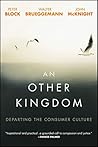
An Other Kingdom: Departing the Consumer CultureAn Other Kingdom: Departing the Consumer Culture by Peter Block
My rating: 2 of 5 stars

While I appreciate the vision of this book - and economy based on covenant and common good rather than contract and individualism - I disagree with much of its application. The only way to bring the vision into practice is through excessive government intervention into people's lives. There are many problems with much of our economy, but those can't be fixed by further regulation and redistribution.

Some of their interpretation of other writers is poor. For example, the authors reduce Adam Smith to a modern-day Libertarian. But their view shows a stereotype of Smith rather than a true reading of his work. He was far more nuanced in his approach of political economy than such an surface-reading suggests. Also, the use of Scripture to support their goals is admirable, but it is one-sided, neglecting what Scripture says about the personal responsibility people must take for their choices.

The language of neighborliness, mystery, liturgy, and covenant is humane way of presenting their arguments, but the application left much to be desired.


Helpers of Our Joy

Helpers of our Joy: How Humorists Help us See the World in the Light of Eternity What's the point of humorous stories? Some people see t...