Thursday, January 14, 2021

Setting Goals

This is the first portion of a lecture I delivered on goals and habits. 

Time is precious. Your time is marked when you’re young by holidays, usually Christmas or birthdays. As you grow older, those markers become more closely aligned, because you have more years behind you. As you grow, your memories collapse together. The question is, what will you do with your time?

Time is a gift, just as any other type of wealth. Every person is allotted 24 hours in a day, 365 ¼ days a year. Why do some people accomplish more than others? Because of the way they use time. If you are lazy, you will not accomplish as much. On the other hand, others follow the tyranny of the urgent, only doing the things that are in front of them, rather than investing your time beforehand. Don be that person either. We are called to invest, to be good stewards of our time. This doesn’t mean we only work all day, every day. It means we plan beforehand for how we will spend our time. ‘

One of the saddest things to hear is someone who is older who regrets wasting their time on their daily job, their bad habits, or selfish behavior. It is not possible to have everything you want; scarcity is still with us. But God has given you gifts, abilities, wealth, and time to use those things.

Your life is not your own. Throughout your life there will be stops, starts, energy, and lack thereof. Yet in everything, God controls your life. You belong to Him and He calls you to use your gifts to honor Him.

The direction of your life is largely in front of you. You have a multitude of options available, based on your gifts or skills. The choices you make in the next several years will determine the path you follow, the person you marry, and the eulogy that will read about you at your funeral. 

We will talk about those choices soon, but this week we must consider the first objective: setting goals and building habits. A goal is not just a task, but a building-block to the type of person you want to become. Years ago, when our family moved out to Idaho, the trip took 36 hours of driving, not including stops. Our final destination was Lewiston, Idaho, but there had to be planning beforehand. I planned four stops along the way. We would stay there each night and go the next morning. I realized my planning was not thorough enough because one of the stops, Denver, CO, unbeknownst to me, had three major events going on and every hotel within a 1-hour radius of the city was booked. We ended up driving until almost 1:30 in the morning and staying 1 and ½ hours further north.

You should have one or two final goals, the things you want to do with your life, which will probably resemble the final goal of others. But the stops along the way will be different for each of you, based on where you are. The stops along the way are your goals now. I thought Lewiston might be a long-term place for us to live, but it turned out that we only lived there two years. Then we repeated the trip back, although to a different place in Alabama. Your life will change and you will have to adapt at times, but your goals are still attainable.

Why set goals? They require you to set a destination. You’ve probably hear the saying, “If you aim at nothing, you’ll hit it every time.” That is true. There must be something you want to achieve.

They must be goals that motivate you. You won’t pursue them if they don’t. It will probably be something that you appreciate or want to become.

They should be SMART (https://www.mindtools.com/pages/article/newHTE_90.htm).

Specific – they must be clear, not vague. For example, when we traveled instead of saying, “Denver, CO,” I should have said, “The Holiday Inn Express at 123 Johnson Street in Denver.”

Measurable – you must know how you can determine whether or not you met the goal.

Attainable – if it is not within your reach in the time you set, you will get discouraged and be more tempted to quit.

Relevant – they should be in the service of the general direction you want to go. If we were travelling from Alabama to Idaho, we shouldn’t set a goal of stopping in Maine. It’s not relevant to our main goal.

Time Bound – there should be a specific time you plan on achieving your goal. If not, you will flounder. We planned on driving approximately 9-10 hours each day on our trip west. Establishing a time (create a website in 6 months) puts you under the gun.

Finally, they must have an action plan, a method of putting the steps towards achieving that goal into practice. In our traveling case, the action plan were the roads we’ve travel to get where we wanted to be at the end of each day.

Friday, January 8, 2021

The Lord of Armies

"The Lord of hosts is with us, the God of Jacob is our refuge." Psalm 46:7

It is common in Scripture to see the name "Lord of hosts," ascribed to God. It means "Lord of armies," as in, the armies of heaven and earth (Daniel 4:35). God's people were always a small nation when compared to the others surrounding them. Though they had an army in the time of the kings (Saul, David, etc.), they had to rely on God for deliverance. It was only by relying on Him that they were able to win in battle. You regularly see them victorious when they humbly seek God in prayer first, and usually defeated when they rely on the arm of man alone. It was always the Lord of armies who gave them victory in battle.

It became even more important to trust in Yahweh's protection after they returned from exile in Babylon, and that is exactly when you see this name for God come into much more common use. When God's people returned to their homeland, they had no standing army. They were under the dominion of Persia, sort of a colony. If they faced attack from outside, they had no earthly king who would lead them into battle. They had to rely on the Lord of armies to defeat their enemies. This didn't mean they would not fight (see the story of Esther), but there was no main leader to whom they could trust. It was either God or no one. 

I thought about this recently after the events of this past week: Republicans lost in Georgia, giving the Presidency, the U.S. House, and Senate all to a political party who seeks to increasingly restrict the voice of orthodox Christians from all spheres of life. This is in addition to the decades-long push by the largest businesses in the U.S. to pull down all opposition to the ongoing techno-sexual revolution. The icing on the cake this week was the mob invading the U.S. Capitol building, and the association of those clowns with anyone who opposes the incoming President and his party. 

Before the special Georgia election, some (including me) said that surely at least one Republican would be elected and at least the Senate would be able to block the garbage from the House. But no, there is now no block. Even then, aside from judges, how much good have the so-called "good guys" done when they controlled the Presidency, House, and Senate? Might our hopes have been put in the wrong thing?

God's people in the United States need to learn what our brethren in Nigeria, China, and Iran have known for a long time: our only help comes from the Lord of hosts. Certainly we should pursue the election of godly leaders, men and women who will lead in justice, mercy, and humility, who will speak out against technocracy, sexual perversion, and stand/fight for truth. But never forget that our deliverance, our protection, and our victory belongs to the Lord of hosts.

When we're tempted to become cynical, to despair, and put our heads down, remember He who fights for us is greater than the forces who oppose us. Men have and will fail at times - therefore we don't put our ultimate hope in men. We might not see all our allies, but in God's cosmic commonwealth, the opposition is at His mercy. In the meantime we continue working, praying, standing upright, and pursuing the ground before us. All the while remembering that no matter what happens, the Lord of armies is our defense. 

Monday, January 4, 2021

Owning Our Curse

Genesis 9 tells the story of Noah after his return from the ark. Having retired from zoology, he took up gardening, specifically planting a vineyard. One day after drinking too much, he went to his tent. His son Ham went in, saw his father naked, and scornfully told his two brothers about it. They quickly took a cloth and covered their father without looking at him. Upon recovering from his drunken state, Noah cursed Ham's son, Canaan. 

This story has led to plenty of theories of what Ham actually did. I will not delve into those, but Scripture makes it plain that Ham was wrong. At the very least he revealed the shame of his father, while Shem and Japheth covered their father's shame. Nothing is said about Noah's being drunk. There were no commands about drunkenness at the time and Scripture does not condemn him; for us to do so is to miss part of the point.

There's a lesson for us in this passage. It's become popular to  heap scorn upon prior generations for their sins and blind spots. Those blind spots are real and we should certainly learn from them. But there is a great difference between that learning from our fathers' mistakes and publicly proclaiming their shame. I suspect our reasons for doing so are similar to Ham's: we think if we shame our fathers, we no longer have to submit to them. We showcase their sins (whether real or perceived) and think it frees us from hearing what they have to say. In doing so, we bring a curse upon our offspring. 

We teach them to scoff at the guidance of the past and consider our scoffing virtuous, saying those old paths lead to slavery. In fact, it's only those paths that chart a course out of our dark modern cave. This is no call to ignore the sins of our fathers. But to ignore their wisdom and proclaim their shame, we sin against them. Only by loving and appreciating our forebears can we learn from them. Only by receiving their wisdom can we protect our children and grandchildren from the ignorance of the age. 

Saturday, January 2, 2021

In Defense of Real Church


The most significant attack on the Church currently is sexual relativism. This infection has been invading for decades and the host has shown little defense. But perversion is not the only attack, just the most significant one currently. There are other lines of attack, and one we must prepare for is the attack on real, local churches.

I don’t necessarily believe churches will be physically attacked. Right now that would draw too much attention and support for them. Our enemy – the one not of flesh and blood – is too smart for that. He prepared the groundwork for this attack through confusing reality and mediated reality over the last sixty years. “Reality” as I refer to it here is that which exists and is true, regardless of our human perception or understanding. Mediated reality, in contrast is what we perceive to be real as mediated by other sources, particularly technological sources.[1]

Friday, December 11, 2020

Augustine and Politics (2)

 "Augustine’s two ways of speaking of the city of God and the earthly city make

sense in light of the distinction among his readers. Carnal readers dominated

by the lust for domination will more likely have to be told that the city of God

is the Church because that holds out the best hope for taming their prideful

ambitions. They will hear that happiness consists not in politics but only

through submission to Christ and community in the Church. More virtuous

readers will learn that the two cities actually refer to the dominant loves and

that the two cities intermingle in the Church and the political city. The latter

group constitutes a greater hope that the political city might be more justly

governed." - John von Heyking, Augustine and Politics as Longing in the World

Thursday, December 10, 2020

Augustine and Politics (1)

 John von Heyking, in his introduction to Augustine and the Politics of Longing, begins with an interesting thesis. "Instead of arguing that politics is based on sin, [Augustine] actually considered political life a substantive good that fulfills human beings’ longings for a kind of wholeness...Instead of basing his politics on a natural law ethic or on one whereby authority is conferred by direct revelation, Augustine actually held to an understanding of political ethics that emphasizes practical wisdom and judgment in a mode that resembles that of Aristotle and Cicero rather than of Machiavelli."

This introduces a unique perspective on Augustine, as many have used his view of original sin as the lens through which he viewed politics. To a point that is true, but I've questioned to what degree. We must be leery of removing Augustine from his particular time in history - the transitory period from the ancient to medieval eras - and projecting our post-Reformation perspective onto his vision. 

I don't know how well Heyking will prove his thesis, but on the surface it makes more sense to me than most modern interpretations I've read because it keeps him as a man of his time, receiving the best wisdom of the ancients rather than turning him into a pre-Renaissance political philosopher. 

Monday, May 11, 2020

Loving the Church

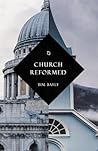
Church ReformedChurch Reformed by Tim Bayly


This is not a book to help you feel better about yourself or your church. It is a simple book that explains what the Church is, why she exists, and how she should respond to her husband, the Lord Jesus Christ. It is a book about Reformation, particularly what the Protestant Reformers recovered, and how much of that recovery has been lost. Certainly we can point to the similarities we've maintained with our forefathers in the faith, but as the author points out, we can keep the shell of orthodoxy while hollowing out the living faith that was passed down to us.

Pastor Bayly gives a solid presentation and explanation of the Reformed doctrine of the Church and how it applies, that is, how we should live in light of those teachings. It he stopped there, it would be similar to other confessional books on the Church. But he goes further. In the last chapter - my personal favorite - calls people to love the Church. Not just to love the Church invisible or universal church, bu the visible, local, and at times, sinful church.

We've all heard that no church is perfect, which is true. What's also true is that when we get hurt or find something in the church that grates on us, we too quickly pick up our toys and leave. We can easily profess to love the church while neglecting to gather with the saints and exhort one another. That's not loving. Pastor Bayly calls us to not forsake our local congregations just because we spot imperfections in out pastors, elders, and members. This is a temptation because a book like this makes it easier to see her flaws. We love her because Jesus loves her; we are called to sacrifice for her as our Savior sacrificed Himself for her. How do we do that? We pray for her, we serve her, and we remain faithful to her despite her problems.

Don't read this book if you expect your inner pharisee to be strengthened. There's something in this book to convict every person who reads it. You will probably get frustrated at some points or disagree at others. Don't let that stop you from seeing it through. If you come away with a deeper appreciation and desire to honor the Bride of Christ, the author's job is complete.

View all my reviews

Helpers of Our Joy

Helpers of our Joy: How Humorists Help us See the World in the Light of Eternity What's the point of humorous stories? Some people see t...